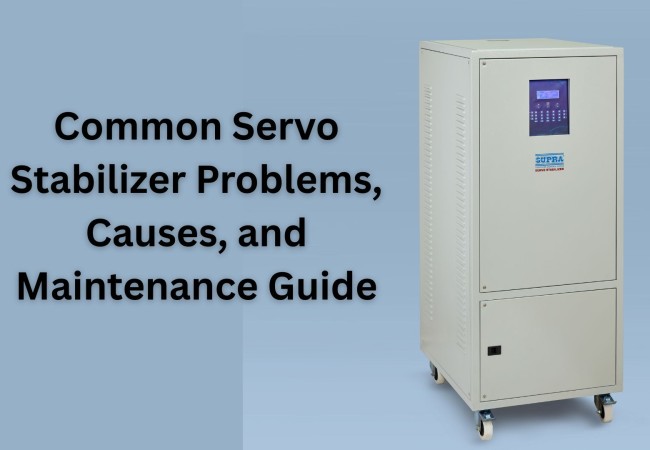
Whether you manage a factory, hospital, or a high-end home office, you know that the electricity isn’t always stable. Sudden voltage spikes or drops can silently harm even the most costly equipment. A servo voltage stabilizer acts as a protector for your devices, keeping the power steady and safeguarding your investments.
However, like any machine with moving parts, a servo stabilizer can wear out over time. If it’s buzzing more than normal, reacting slowly, or failing to keep voltage stable, it’s a sign that it needs maintenance. This guide will explain the common causes of failure and show you how to keep your stabilizer running efficiently for years.
How a Servo Voltage Stabilizer Operates
A servo voltage stabilizer is an automatic voltage regulation device designed to maintain a constant output voltage despite variations in input supply. It continuously monitors incoming voltage and corrects it using a servo motor-driven variable transformer.
Here’s a simplified breakdown of how it works:
- The control circuit detects voltage fluctuations.
- If the voltage rises or drops beyond the preset range, the servo motor activates.
- The motor adjusts the carbon brush over the transformer winding.
- The output voltage is corrected to the required level.
This continuous monitoring and correction ensure that sensitive equipment receives stable power, preventing damage caused by under-voltage or over-voltage conditions.
Common Stabilizer Problems
Even the best stabilizers can run into trouble eventually, particularly if they're pushed too hard or neglected. Here's a quick rundown of the typical problems and their causes.
1. Overheating
Overheating is the most frequent issue with stabilizers. It happens when you overload the unit, put it in a small, poorly ventilated space, or run it in a hot environment. Continuous heat can damage internal parts like copper coils and transformers, which shortens their lifespan. Over time, this may lead to sudden failure. To keep your stabilizer running well, maintain good ventilation, select the right load size, and avoid tight installations.
2. Constant Voltage Fluctuations
Constant voltage fluctuations refer to the quick changes in incoming voltage. The stabilizer's servo motor continuously adjusts to maintain steady output. This process puts stress on both the motor and the control board. Frequent adjustments lead to increased wear and tear, higher energy consumption, and may eventually cause malfunctions or total failure. To reduce this, it's important to select the appropriate capacity for your load and implement effective surge protection. Monitoring voltage patterns ensures your stabilizer can safely handle any fluctuations.
3. Unusual Noise or Humming
A good stabilizer should hum softly. If it starts buzzing, grinding, or popping, it’s a warning. Buzzing usually means loose transformer plates. Grinding indicates dry motor bearings, while popping shows worn carbon brushes. Ignoring these sounds can lead to bigger problems, such as motor failure or transformer damage. Regular checks, timely lubrication, and early replacement of worn parts keep your stabilizer quiet, efficient, and lasting.
4. Slow Reaction Times
If a stabilizer responds slowly to voltage changes, sensitive equipment can trip, reset, or get damaged. Slow response is usually caused by dust on copper tracks, worn carbon brushes, or a weak motor capacitor. Regular cleaning, checking brushes, and replacing old capacitors can restore speed and efficiency. A stabilizer that responds quickly protects electronics from sudden voltage spikes and keeps your operations running smoothly, especially in critical office or industrial environments.
5. Mechanical Wear and Tear
Stabilizers have moving parts like gears, chains, and brush arms. These parts wear out as time goes on. A lack of lubrication, incorrect installation, or heavy use can lead to jamming or breaking. To keep things running smoothly, do regular inspections, grease the moving parts, and fix any alignment issues. Maintaining the mechanical parts is key. It reduces strain on the motor, prevents failures, and extends the stabilizer's lifespan, even in tough industrial or office settings.
6. Calibration Issues
If your stabilizer isn’t producing the correct voltage while the input is normal, it might need recalibration. This could happen if the servo mechanism is slightly misaligned or if some parts are worn out. Regular checks and professional calibration keep the stabilizer working correctly, protecting your sensitive equipment and ensuring stable voltage. Proper calibration also improves efficiency and reduces wear on the stabilizer over time.
7. PCB or Control Board Failure
The control board controls voltage regulation and motor movements in a stabilizer. Over time, faulty components, short circuits, or constant strain from voltage fluctuations can cause it to fail. Signs include erratic operation, slow response, or total failure. Detecting and fixing problems early helps avoid bigger damage and keeps the stabilizer running safely and reliably. Maintaining the PCB ensures the stabilizer responds quickly and prolongs its overall lifespan.
Maintenance Tips to Prevent Issues in Servo Stabilizers
Regular preventive maintenance significantly reduces the chances of failure and extends equipment lifespan. Here’s what you can do:
- Avoid Overloading: Always operate within the rated capacity.
- Ensure Proper Ventilation: Install the unit in a well-ventilated area.
- Clean Regularly: Remove dust and debris from internal components.
- Check Connections: Tighten electrical terminals periodically.
- Inspect Carbon Brushes: Replace worn brushes promptly.
- Monitor Temperature: Ensure operating conditions remain within recommended limits.
- Schedule Professional Servicing: Annual inspection by qualified technicians is highly recommended.
Regular, simple maintenance can significantly extend your stabilizer's lifespan. It also helps you avoid sudden failures, expensive repairs, and unplanned outages.
How to Choose The Right Servo Stabilizer?
If you’re buying a new stabilizer, focus on what’s inside rather than fancy displays. What truly matters is how well it protects your equipment.
- Load Capacity (kVA Rating): Calculate total connected load with future expansion in mind.
- Input Voltage Range: Ensure compatibility with local power conditions.
- Output Accuracy: Choose stabilizers offering precise regulation (±1% or ±2%).
- Single Phase or Three Phase: Select according to application needs.
- Environmental Conditions: Consider humidity, dust levels, and temperature.
- Build Quality & Components: Opt for high-quality transformers, motors, and control systems.
- After-Sales Support: Reliable service support is crucial for long-term performance.
Investing in a high-quality servo stabilizer from a trusted manufacturer reduces downtime, repair costs, and equipment damage risks.
Learn more about: Energy Consumption by Voltage Stabilizers: Facts and Misconceptions
Trusting the Right Experts
Servo stabilizers are essential for maintaining voltage stability and protecting valuable equipment from power-related damage. However, factors such as overheating, mechanical wear, calibration drift, PCB failure, and extreme voltage fluctuations can lead to operational issues if not addressed in time. Regular maintenance, correct installation, and proper capacity selection are key to ensuring long-term reliability.
Supra Hi-Tech is a leading manufacturer and provider of advanced power control and backup solutions, trusted for decades in industries, businesses, and homes. We specialize in designing and producing high-quality power products, including online UPS systems, line-interactive UPS, servo stabilizers, inverters, solar solutions, and related power accessories.
With a strong focus on innovation, durability, and performance, Supra Hi-Tech delivers reliable power solutions tailored to diverse applications.