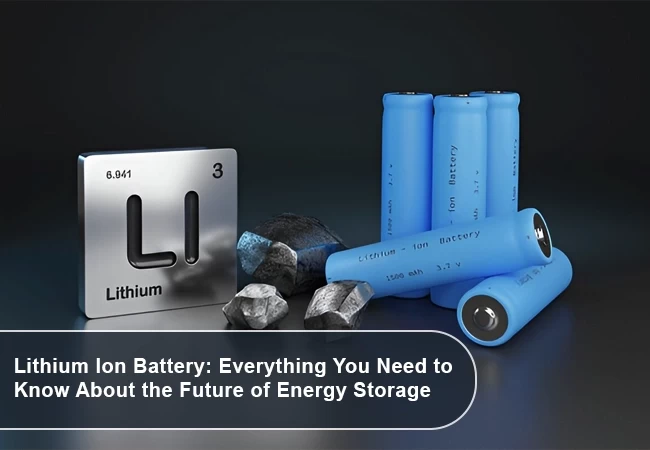
In our modern world, lithium-ion batteries have a huge place in daily life. It is used to power everything from smartphones and laptops to electric vehicles and renewable energy storage systems. Their development has transformed the way we use portable electronics, making devices lighter, more efficient, and longer lasting. Apart from consumer gadgets, these batteries are now a driving force in the global shift toward cleaner, more sustainable energy solutions. As a result of the lithium-ion battery adoption, solar and wind energy can be stored, and this increases the reliability and accessibility of renewable energy. In this blog, we will discuss lithium-ion batteries and everything you need to know about future storage.
What is a Lithium-Ion Battery?
A lithium-ion battery works by moving lithium ions between two electrodes to create electricity. It is a type of rechargeable battery, and the following are its main parts:
- In a battery, the cathode is the positive electrode that stores lithium ions when the battery is discharged.
- Anode, also known as the negative electrode in a battery, is the place where lithium ions are stored when the battery is charging.
- An electrolyte can be thought of as a chemical medium that allows lithium ions to flow between the anode and the cathode of an electrolytic cell.
- Separator, a porous membrane that keeps the cathode and anode from touching to prevent a short circuit.
Charged devices produce an electric current that moves lithium ions away from the cathode during the charging process. When the device is in use, the ions return to the cathode, and this releases the stored energy as an electric current that runs your device.
Features of Lithium-ion Battery
-
High Performance
When compared to traditional batteries, lithium-ion batteries offer better performance, longer lifespan, as well as easier maintenance.
-
Diverse Applications
From consumer electronics, power tools, to electric vehicles and large-scale energy storage systems, many products use lithium ion batteries for their functioning.
-
Variety of Chemistries
It is important to understand that not all lithium-ion batteries are the same. There are various chemical compositions, such as LFP, NMC, or LCO, that offer various combinations of energy, power, safety, and cost.
Types and Uses of Lithium-Ion
It is essential to understand that lithium-ion batteries are not a one-size-fits-all solution. The table below shows the different battery types, characteristics, as well as common applications.
|
Battery Type |
Key Characteristics |
Common Applications |
|
Lithium Cobalt Oxide (LCO) |
High energy density. Shorter lifespan. Lower thermal stability. |
Smartphones, laptops, and digital cameras. |
|
Lithium Iron Phosphate (LFP) |
Excellent safety, long cycle life, and thermal stability, but lower energy density. |
Electric vehicles, power tools, and grid energy storage. |
|
Lithium Nickel Manganese Cobalt Oxide (NMC) |
A balanced combination of high energy density, good lifespan, and safety |
E-bikes, medical devices, and a significant portion of the electric vehicle market. |
|
Lithium Nickel Cobalt Aluminum Oxide (NCA) |
High energy density and a long lifespan make it a popular choice for some high-performance electric vehicles. |
Mostly used in electric vehicles as well as for grid storage. |
|
Lithium Titanate (LTO) |
It charges fast, has a long cycle life, and operates at a wide range of temperatures. More costly. Lower energy density. |
Aerospace applications, electric vehicle charging stations, and specialized industrial uses. |
Advantages of Lithium-Ion Batteries
The widespread adoption of Li-ion technology can be attributed to a number of factors. It is important to note that these batteries offer several key advantages over their predecessors, including:
- High Energy Density: A small, lightweight package is enough to store a large amount of energy. This is why smartphone can be manufactured so thin yet last all day.
- Long Cycle Life: Li-ion batteries can be charged and discharged hundreds or even thousands of times before their capacity degrades.
- Low Self-Discharge: When not in use, their batteries hold their charge for a very long time, with a self-discharge rate of 1.5-2% per month.
- Low Maintenance: Different from older battery types, Li-ion batteries do not require scheduled cycling to maintain their health and have no memory effect.
Disadvantages and Challenges
There are many benefits of lithium-ion batteries, but they also have some disadvantages that need to be taken into consideration. It is harmful to the environment when raw materials like lithium and cobalt are extracted, causing water pollution, soil damage, and high levels of greenhouse gas emissions. The safety of batteries can also become a problem due to the fact that damaged or overcharged batteries, or those that are exposed to high temperatures, may overheat and explode. Even though prices have dropped over time, these batteries still make up a large share of the total cost of products such as electric vehicles. In addition to this, they also do not work well in extreme heat or cold, which can have an adverse impact on their overall efficiency.
The Future of Energy Storage
It is no doubt that the need for better energy storage is driving incredible innovation in this field. Despite the fact that lithium-ion technology will continue to be a dominant force for many years to come, several exciting alternatives are on the horizon, including:
-
Solid-State Batteries
A solid-state battery, which has been hailed as a potential game-changer, replaces the liquid electrolyte with a solid material rather than a liquid electrolyte. Using solid electrolytes in batteries has the potential to lead to even more energy density, faster charging times, and increased safety. This is mainly because solid electrolytes are non-flammable.
-
Sodium-Ion Batteries
In these batteries, sodium instead of lithium is used because it is abundant and inexpensive. Even though they currently have a lower energy density than Li-ion batteries, they offer a more sustainable and cost-effective option. When compared with Li-ion, this is especially suited for large-scale applications such as grid storage.
-
Other Chemistries
Researchers are also exploring other options, such as lithium-sulfur and multivalent-ion batteries using elements like magnesium and zinc, which could offer even greater energy storage capabilities.
Conclusion
In the past few decades, lithium ion batteries have fundamentally changed the world of technology, powering all of the devices that connect us and many of the vehicles that are leading the way to a cleaner energy future. They are the best energy storage solution of our time due to their high performance. It is, however, vital to acknowledge the challenges they present in terms of environment and safety. Technology continues to advance, and as a result, the landscape of energy storage is poised to become even more complex and interesting in the future. The development of next-generation technologies like solid-state and sodium-ion batteries promises a future where our power sources are more efficient and also safer as well as more sustainable. For more information, get in touch with Supra Hi-Tech, the leading battery suppliers in India.