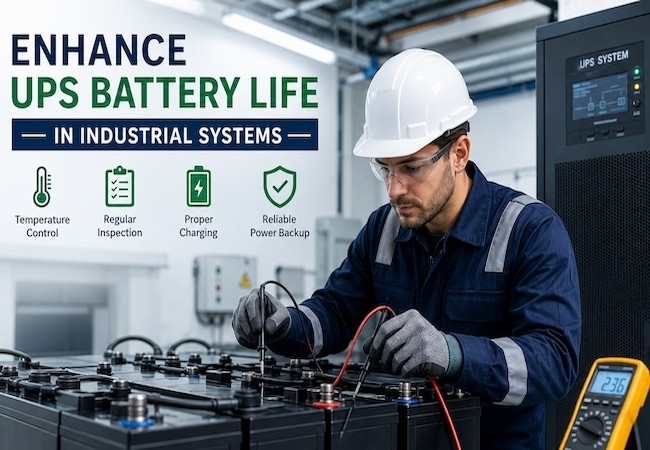
What happens when a UPS battery fails during a critical industrial operation? The consequences for this issue can range from downtime in production to major financial loses. In an industrial environment where uninterrupted power is a mandate, the only reliable solution is a UPS system. The reliability of a UPS system is, however, very dependent on the health of the UPS batteries. Whether it's an industrial facility, data center, healthcare setting, or a processing plant, effective UPS batteries stand as the first line of defense against power outages.
But industrial batteries for UPS work under extreme conditions and often have some factors which can reduce the life of these batteries. Gradually, the performance of the battery can be diminished with the use of poor maintenance, too much heat, improper charging procedures and frequent discharge cycles. By being aware of factors that impact battery health and by implementing good maintenance habits, companies can prolong UPS battery life, minimize replacement expenses and ensure a reliable power protection solution for critical operations.
In this article, we will look at the main factors that influence the performance of UPS batteries briefly. We will also take a look at practical tips that can help industrial sites get more out of their power backup systems, maximize battery life and make them more reliable.
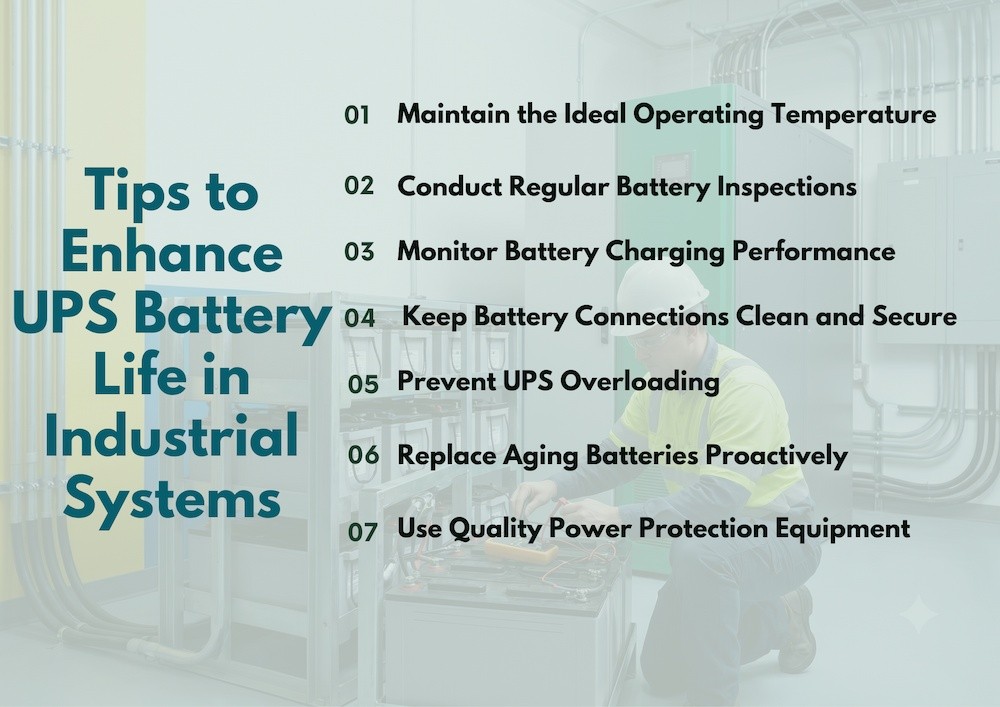
1. Maintain the Ideal Operating Temperature
One of the basic factors that affect how long a battery system with a UPS can hold its charge is temperature. The vast majority of UPS batteries have an optimum temperature of about 20°C to 25°C. But at higher temperatures for longer periods, the internal chemical reactions are accelerated resulting in degradation at a faster rate.
UPS systems for industrial facilities should be located in a well-ventilated area and should be cooled. Regular monitoring of battery rooms is necessary to avoid excess heat build-up. A rise in temperature (even slightly outside the recommended range) can seriously reduce battery life in the long run.
Similarly, very cold temperatures will also have an impact on battery efficiency and backup performance. Stable operating environment allows batteries to work steadily and last longer.
2. Conduct Regular Battery Inspections
Routine inspections are essential for identifying early signs of battery deterioration before they lead to system failures. Industrial maintenance teams should regularly check for the following:
- Corrosion on battery terminals
- Loose electrical connections
- Swelling or deformation of battery cases
- Electrolyte leakage
- Signs of overheating
- Unusual odors
Visual inspections combined with periodic electrical testing can help detect potential issues early and prevent unexpected battery failures.
3. Monitor Battery Charging Performance
To keep the battery in good condition, it is important to charge it properly. Overcharging may result in overheating and make batteries degrade, while undercharging may cause sulfation and battery capacity reduction.
Intelligent charging systems are in most modern UPS, and automatically adjust the charging parameters. However, it is still recommended to test the charging performance periodically, particularly in large-scale industrial installations.
The charging voltage should be kept within the manufacturer's recommendations and batteries should be charged regularly after every power outage by maintenance personnel.
4. Keep Battery Connections Clean and Secure
The battery terminals and cable connections are important components in transferring power. Loose connections or corroded connections can cause electrical resistance that can create heat and poor UPS performance.
Cleaning battery terminals regularly ensures good conductivity, reducing energy losses. Connections should also be tightened as per the manufacturer's instructions so that voltage drops or localized heating does not occur.
Simple maintenance measures like cleaning and tightening connections can make a big difference in the service life of batteries.
5. Prevent UPS Overloading
When the system is overloaded, the UPS will cause overloading of both the inverter and the battery. When batteries are not operated within their rated capacity or are operated outside the rated capacity, they will discharge faster during a power outage and will wear out sooner than normal.
Periodic reviews of load requirements and verify that UPS systems are sized to meet current load demands are recommended for industrial facilities. UPS capacity should be re-evaluated as capacity for production equipment, automation systems and IT infrastructure grows.
With the right load management, the battery's life can be extended and refined to maintain backup with reliability.
6. Replace Aging Batteries Proactively
It is important to understand that even with good maintenance, UPS batteries still have a limited service life. The average lifespan of most industrial UPS batteries is three to five years, but this can vary based on operating conditions, usage patterns and maintenance practices.
Allowing batteries to fully deplete can pose major risks to facilities. Alternatively, organizations should have replacement schedules in accordance with manufacturer guidelines and battery performance information.
Proactive battery replacement minimizes downtime and helps maintain uninterrupted protection for critical equipment.
7. Use Quality Power Protection Equipment
Battery performance is greatly affected by the quality of the UPS system. Enhaned monitoring, controlled charging, intelligent battery management, and voltage regulation are some of the advanced UPS technologies.
Reliable power protection systems should be tailored for extremely challenging industrial environments. High quality systems offer more than just the best backup performance, however, they can also help optimize battery life and performance.
Learn More: Top Industries That Need Online UPS Systems
Reliable Power Protection Solutions from Supra Hi-Tech
Maintaining UPS battery health is only one part of achieving dependable power backup in industrial environments. The performance and reliability of the UPS system and the longevity of the batteries very much depend on the quality of the UPS system and the associated power management equipment.
Supra Hi-Tech is a trusted manufacturer & provider of advanced power control & backup solutions. Over the years we have gained the trust of industries, businesses and households. The company is a manufacturer of online UPS systems, line-interactive UPS, servo stabilisers, inverters, solar solutions and power accessories of high quality.
Designed to meet the needs of modern industrial operations, our power solutions enable companies to protect their critical equipment, keep operations running smoothly and control power fluctuations. Supra Hi-Tech continues to support organizations looking for robust power backup and voltage regulation solutions for their facilities, with a strong focus on quality, performance and long-term reliability.